
Yegor Rubanov
On Freedom
By Timothy Snyder
Crown. 384 pp. $20.00
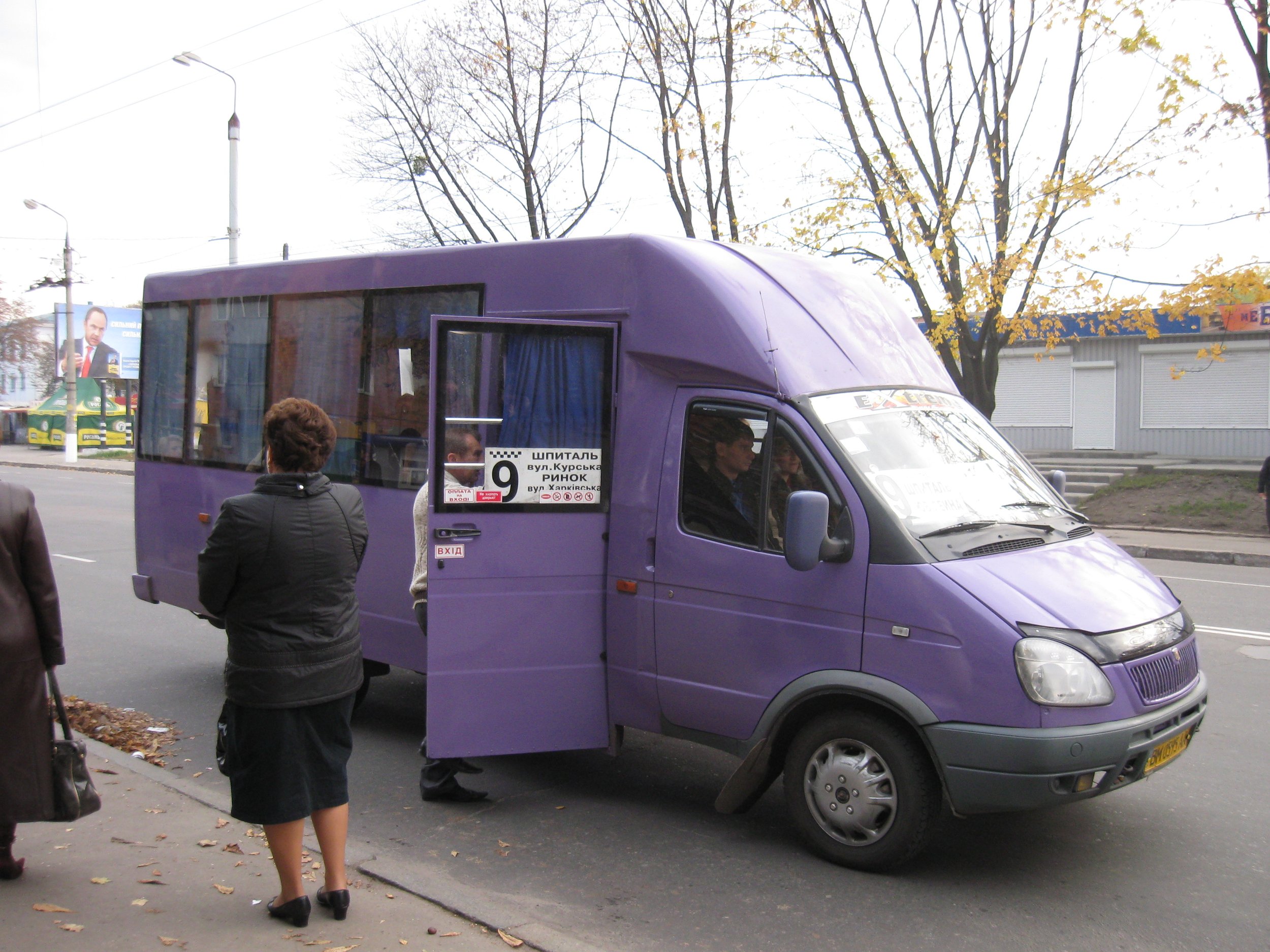
A marshrutka in Sumy, Ukraine, 2009.
Each summer between the ages of twelve and sixteen, I travelled on the ramshackle Ukrainian marshrutka, the country’s intercity transportation system, from the outskirts of Kyiv to my grandma’s house in the countryside. I spent hours observing passengers slip past one another, fight for seats, and complain about the broken air conditioning and ever-rising ticket prices. The chain-smoking bus driver tended to be in a world of his own, unaffected by the Orthodox cupolas flashing past the windows and the incoherent rumble of the radio. Still, for all his aloofness, I never doubted that he could get me to my destination. He was the sage of the road, the master of the terrain. Who else could get us home?
Reading Timothy Snyder’s On Freedom, it seems the public intellectual aspires to a similar role. The book’s central claim is that adopting a positive, rather than a negative, understanding of liberty (“freedom to” rather than “freedom from”) can help us better sustain five essential forms of liberty: sovereignty, unpredictability, mobility, factuality, and solidarity. If we have the right ideas about freedom, the argument goes, we will be on the way to improving our political institutions: “Reasoning forward from the right definition will get us to the right sort of government.”
Snyder, who left Yale in 2024 to teach Eastern European history at the University of Toronto and has authored numerous books on the region, has a lot to tell us about why we should move toward a positive conception of freedom, and about what that could look like in America. His proposed method of cure, however, undermines his vision because it treats understanding alone as the path to transformation, conceptual clarity as political change. Like the marshrutka driver, Snyder knows well where he wants to go, but a steadfast focus on the destination leads him to mistake his map for the journey itself.
***
On Freedom draws on history to illustrate the dangers of construing freedom negatively. Slavery in America, Snyder tells us, was historically understood as a negative freedom, a property right “with which the government was not to interfere.” The result of this conception was a widespread tendency to regard laws that favored Black people as necessarily meddlesome with everyone else’s rights, a tendency whose consequences persist to this day. Snyder thinks, for example, that the United States’ failure to establish universal healthcare is related to the American public’s skepticism toward laws that expand Black people’s rights.
But political attitudes do not emerge in isolation. They are the products of economic structures and power arrangements already in place. The reason why universal healthcare can’t be passed is not simply, or even primarily, that we don’t think expansively enough about freedom. Policy failures are equally the result of lobbying by corporations that exploit the public for profit—and will keep doing so regardless of how we define freedom.
Snyder himself notes that slaveowners in America historically “define[d] freedom negatively, as the absence of government, because only a government could emancipate the slaves.” If that definition served to defend slavery, how would redefining freedom positively remove the material incentives that motivated a defense of slavery in the first place?
It is precisely this emphasis on ideas that typifies Snyder’s arguments. And nowhere is his sidelining of material reality more stark than in his use of Ukraine. One of the book’s key contentions is that freedom and security need not conflict. Rather than ask us to give up the latter to obtain the former, positive freedom promises to reconcile the two. “When Russia invaded Ukraine,” Snyder writes, “President Volodymyr Zelenskyy did not tell his people that they needed to trade liberty for safety.” Yet the focus on Zelenskyy’s rhetoric conveniently disregards real policy restrictions imposed by the Ukrainian government. Since the beginning of the war, men between the ages of eighteen and sixty have been prohibited by martial law from leaving the country. I myself have not gone back home in over three years, as doing so would legally prevent me from returning to Yale. This policy represents an obvious trade-off between security and freedom of mobility, in direct contradiction of what he takes this keystone example to prove.
Perhaps the book was bound from the outset to develop this structural flaw. Snyder's idealism seems to be the product of the circular logic with which he sets up his framework to begin with. With no small amount of verve, he proclaims liberty “the condition in which all the good things can flow within us and among us.” Yet only a few lines earlier, he told us, “whether we become free depends upon the actions of others, upon the structures that enable those actions, upon the values that enliven those structures.” But does On Freedom not insist upon the importance of construing liberty the right way in our minds precisely so that we may then shape the world around us? How can freedom be both the consequence of our social structures and the foundation required to build them? This unresolved tension allows Snyder to evade the question of how structural change might begin, turning instead to conceptual reorientation, as though that were enough to bring it about.
The book also lacks practicality because it demands both radical individuality and social coherence, without acknowledging the tension between the two. Snyder writes that “everyone we encounter is facing an unceasing succession of choices in their own arrangements of unique circumstances, applying their own combinations of values.” But elsewhere he instructs the reader to “accommodate yourself… to friends and neighbors, to fellow citizens.” He asserts that when we are “sovereign together,” we inherently come into accord, rather than conflict. But how do such radically singular individuals find common ground in the first place? The same circularity that afflicts Snyder’s definition of freedom reappears here: we must converge toward a shared idea of positive freedom, yet this very idea is what is supposed to unite us.
On Freedom imagines a society of “conservative-liberal-socialists,” where, thanks to positive freedom, these different approaches to politics are “perfectly justified and complementary.” Quoting Simone Weil, Snyder asserts that antagonisms between people and systems of thought can be resolved through thoughtfulness and empathy: “I have to choose between the lake and the forest. If I want to see both the lake and the forest, I have to climb higher.”
On the marshrutka there is no throne above the crowd, beyond the cramped aisles, the staggered bodies, or the sweltering heat. Conflicts are not resolved by a shift in perspective because the root cause is more immediate: who grabs the seat before you can get to it, who must endure the driver’s smoke or put up with the baby crying into his ear. Politics is about relationships of power, not mere conceptual misunderstandings. The marshrutka has one infamous rule: the driver may admit only one fare-exempt rider at a time. Whether elderly, disabled, or otherwise eligible, you will not be allowed on the bus if the fare-exempt seat has already been claimed.
This book does, in fairness, diagnose many of the great issues of our time with precision. He discusses, for example, how financial interests limit freedom in America, and goes on to suggest legal reform that would help break the oligarchic control of the media, incentivize innovations in renewable energy, and expand access to healthcare. It’s not that Snyder simply ignores material conditions, but that his method is predicated upon the conviction that understanding them correctly is equivalent to transforming them. As a result, the book ends up conflating individual enlightenment with action, solidarity with strategy, and proper thinking with collective power.
***
On Freedom intends to enliven the passivity of the American people, to release a hot wind that would thaw the country’s frozen public sphere. Snyder illuminates the crisis of our times with much erudition, but in his efforts to provide a map for liberation, he fails to offer tools for fixing our political engine. This is not to dismiss the importance of theory. Conceptual distinctions and normative arguments have diagnostic value. But if freedom is to be an “act of creation,” as Snyder hopes, this theory must increase our capacity to act.
Snyder promises us that “we can be free, if we see what freedom is.” The most liberating aspect of an expedition on the marshrutka is always the relief of finally reaching your stop. Exiting the confines of the bus into the fresh breeze of the countryside, one can’t help but feel a little freer than an hour before. This, however, is where the metaphor reaches its limit. In real life, there is no getting off the bus. Snyder’s destination—where understanding freedom positively makes us free—is a mirage.
The real danger is that the book’s method encourages us to believe in this illusion. Political change is not the consequence of understanding but one of its conditions—forged in the very emergencies and material realities this book seeks to transcend. The driver knows very well where he wants to go, but his sense of direction will not be enough to repair a vehicle that is actively breaking down.
Yegor Rubanov enjoys looking out the tram window.