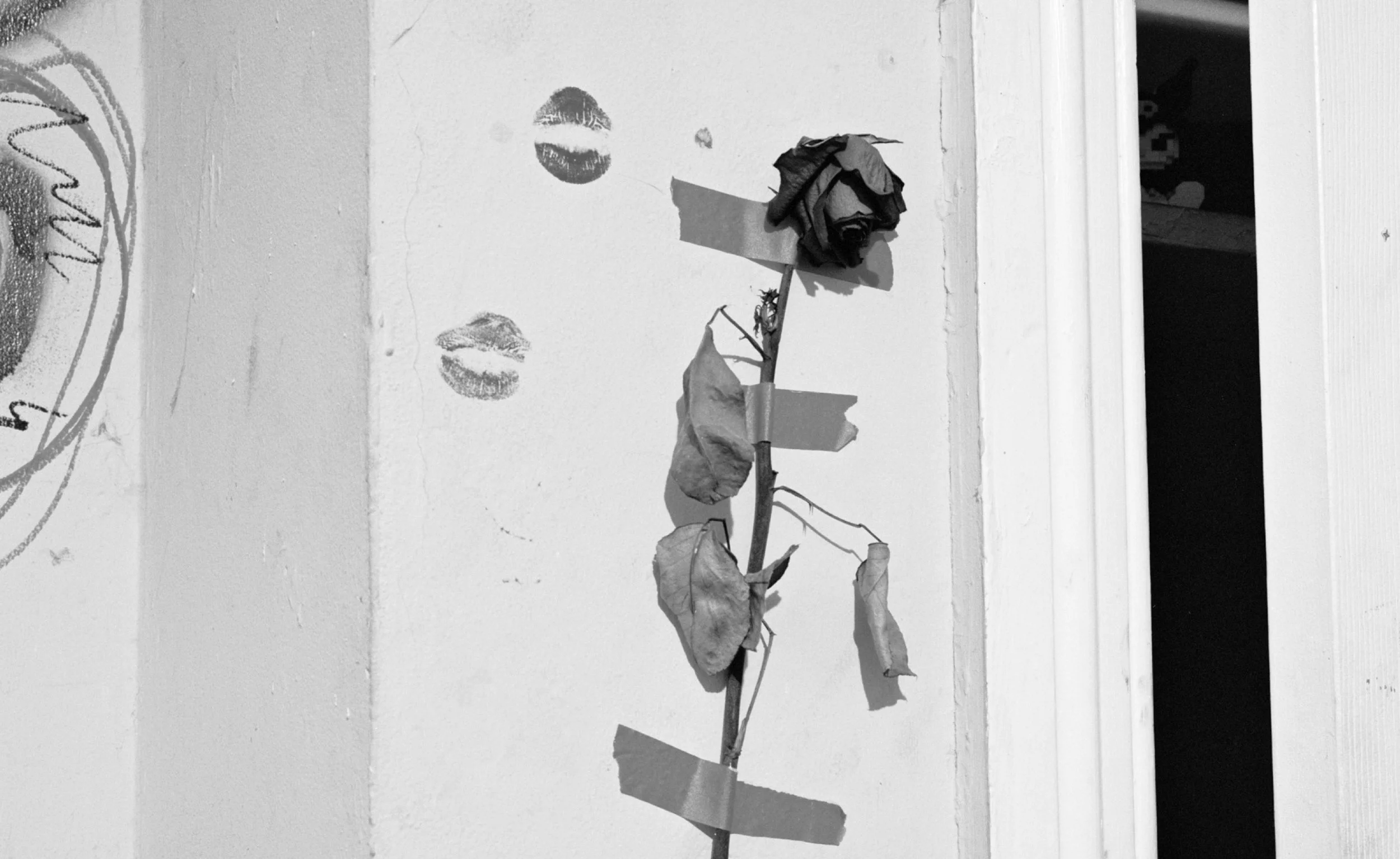
Photo by Christopher Postlewaite
Reading and writing well were once essential skills in both the classroom and the workplace. What use are they today? Large language models can now turn almost any jumbled prompt into presentable prose. So, unless you’re interested in writing for a living, is there any real benefit in spending precious time poring over difficult texts?
The founders of this journal thought so. In the fall of 2017, three Yale undergraduates created BRINK as a forum for young people to “think through—and write for—the world we are about to inherit.” They did so in response to Donald Trump’s first election and the upheaval that followed, because they thought sustained engagement with the written word could help prepare us for the trials ahead.
Now, in 2026, when once again our institutions are out of balance, when international security seems to hang by a precarious thread, when abductions or deaths are daily televised before our eyes, we may ask anew: How helpful can words be, as we strive to meet the moment? Are they well-suited to the vital purpose our founders envisioned for them?
Reading is not, after all, the primary way we learn about the world. These are the times of mass communication, whose propensity to distort the truth our generation knows all too well. Stuart Hall claimed in 1973 that “a ‘raw’ historical event, cannot, in that form, be transmitted by, say, a television broadcast.” Are typed words any better? It can certainly feel daunting, amid the information onslaught of our poorly regulated attention economy, to make sense of the news even in our heads, let alone in prose. Yet it is precisely because reading and writing require considered (and considerable) effort that they remain our best means of cutting through the noise.
These means are not without their flaws. “No language is so copious,” wrote James Madison in 1788, “as to supply words and phrases for every complex idea, or so correct as not to include many equivocally denoting different ideas.” One could be forgiven for doubting that words and phrases, slippery tools that they are, can materially reshape our troubled world. And yet the larger subject of Madison’s remark was a text that did exactly that. He was trying to “calculat[e] the probable effects” of the recently proposed Constitution of the United States, and he recognized the “unavoidable inaccuracy” of language as a major obstacle to that task. We today may be equally interested in calculating the probable effects of our speech on any number of circumstances across our public and personal lives, but the fundamental question remains: Can we really trust our words to communicate what we intend? Can we trust them to do anything at all?
Our contributors to this issue give a range of answers. Sydney Gordon considers language as a tool for articulating identity. Ashley Wang asks how it can distort our sense of place. Yegor Rubanov challenges the way a prominent historian defines freedom. Richie George reads beneath the lurid surface of a viral author’s novels. David Rosenbloom interviews a political theorist about the tangled history of liberalism. Anna Siciliano searches for meaning behind and beyond a music icon’s famous lyrics. And David Bromwich talks to a scholar of the Constitution about what it means—and what it takes—to amend the supreme law of the land.
To bring the book review into the orbit of morality and civic virtue is to put faith in its ability to transcend the page. Legal codes, histories, political treatises, novels, poems—all of these have varying degrees of influence on our lives, but it is hard to say whether any will turn us into better people, or better citizens. As you flip through these pages, reader, we invite you to consider for yourself what words can do, and what they can’t.
—Matías Guevara Ruales & AJ Tapia Wylie, Editors-in-Chief